
For the “I Used to Play” Crowd: How Talented Helps You Reclaim Lost Piano Skills
Introduction — why lost skills are important for both the past and the present
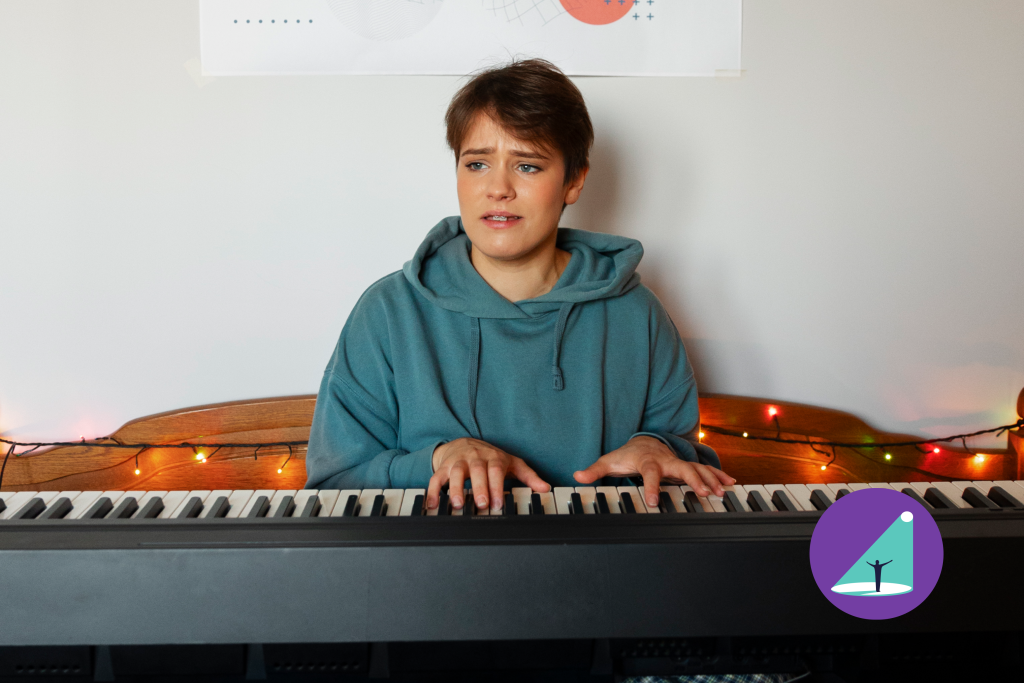
At some time, we all, with either a childhood piano or a youthful guitar, started to learn to play a musical instrument. For one reason or another, though, this journey has been interrupted: work, family, relocation. It would thus seem that after all those years, this early skill has disappeared into oblivion. But is it irretrievably lost, really? No, proof lies in our experience and research. This is where skill reclamation, refresh exercises, adaptive learning, past pianists, and the Talented app turn user nostalgia into practice revival and music fluency.
Lost musical abilities are more than a forgotten set of notes or chords; they are part of your personality, representing not only where you used to be but also where you can be again. The chance to:
- Reconnect to your past
- Boost confidence in oneself
- Find new sources of inspiration
- Expand creative potential and playing skills
Not the simple repetition of old exercises, but the conscious “resurrection” of the lost skills is the way to inner harmony and the pleasure of music. It was this understanding that became the ground for developing an innovative tool helping many today in renewing their musical journey. For a quick re-entry, a free learn to play piano app can jumpstart muscle memory and adaptive review without friction.
Features of Talented methods compared to traditional approaches
Special place Talented occupies in the world of skill recovery, offering more than just relearning usual exercises. While classic methods often confine themselves to simple mechanical repetition and reflex development, deeper Talented works, taking into account the individual characteristics of each user and their progress dynamics.
Several points draw on key differences from Talented methods:
- Flexibility
Instead of fixed programs, Talented adapts to the user’s memory pace and state; therefore, the complexity and intensity of exercises are changed automatically to avoid overloading and stimulate motivation. - Integration of psychological factors.
Not only is physical practice skill restoration, but working with subconscious blocks is, too. Methods that help to overcome internal resistance, the fear of “failure,” and doubts — used by Talented — enhance the rehabilitation effect. - Multimodal approach
A combination of visual, auditory, and tactile stimuli allows engaging different perception channels, which improves deeper information retention and reduces forgetting effects. - Real-time feedback
The platform provides the user with instant result analysis and recommendations for improvement to make the learning process more transparent and effective. - Program individualization
Each session is constructed with a consideration for the individual history of skills and the user’s goals. Due to that, a template approach, so typical for traditional methods — where everyone gets the same set of exercises — is avoided.
Because of this, it should be underlined that Talented doesn’t replace but rather complements classical trainings, helping to restore the lost skills faster and with less effort. A balance of “old” and “new” becomes, therefore, the key to successful recovery even of those skills that seemed timeless. This is precisely the main advantage of the method, making Talented a tool of the future for those who strive to play their “old game” of life on a new level. This is structured skill reclamation powered by the Talented app, tuned for adaptive review and skill refresh.

How to preserve and develop revived skills in the long term
Only the first step is a return to the familiar abilities. The achieved level must be firmly held and the burst of activity turned into a stable skill, which will not fade with time. For three key principles on which our methods rest, here we rely.
1. Uniformity and continuity
Nothing is more powerful than habit. Repetition is the mother of mastery. Very important it is to build a schedule of sessions and to stick with it, to maintain and deepen what has been learned. One doesn’t have to spend daily hours but rather short systematic sessions of 10-20 minutes can strengthen such a skill much more. Constancy not only trains the body or the brain but also cultivates discipline.
2. Variation in practice
Monotony is an enemy of motivation. Different formats and approaches we recommend combining are theory and practice, fine motor skills, and general ones; working alone and in groups. In such a way, the process just won’t be allowed to stagnate, while new connections and contexts stimulate neuroplasticity — enhancing memory and applicability.
3. Goal setting and tracking progress
The feeling of progress is a big motivation. The clearer the goal is, and the more you can see the result after every step taken, then the easier it will be to find time and energy for regular training. The possibility to set small achievable tasks, record successes, and analyze mistakes is provided in our apps to keep interest high and stay on course.
Besides this, the following aspects we suggest taking into account:
- Feedback. Good when there is somebody around who can advise, point to the right actions, recommend. A community, mentor, or even technologies built into the app can serve as that someone. The assessment from the outside helps avoid stagnation, repeating old mistakes.
- Celebration of small victories. Reinforcing oneself for every improvement supports a positive mindset. Psychology long ago proved: rewards, even minimal ones, fuel the desire to continue.
- Constant expanding of context. In real-life conditions is where the revived skill has to live: be it hobbies, work, or daily tasks. The wider the application, the stronger the consolidation.
The long-term development of revived skills is not a one-time project; it’s a continuous process that needs attention and awareness. What’s important for us, the developers, is the creation of tools which would accompany the user from the very first attempts to deep integration of knowledge into life. This way, one will be able to make the skills not only remembered but also a part of personal growth and new achievements. Sustain momentum with refresh exercises and adaptive learning so practice revival stays locked in.
Conclusion — why returning to old skills is an investment in personal growth
The feeling of nostalgia is returning to once “forgotten” skills, yet it is a well-thought-out step able to open completely new horizons of development before an individual. Let’s look at some key reasons why the revival of lost skills can be such a powerful resource for personal growth:
- Restoring self-confidence. The understanding that long-lost skills can be recovered and developed strengthens one’s assessment of oneself. A person starts to perceive their own potential more widely and does not concentrate on failures and losses.
- Development of cognitive flexibility. The process of “recall” and training skills provokes the brain to turn on new neural connections. It helps to better adapt to changes and find unconventional solutions.
- The connection of past and present is the foundation for a holistic self. The person, returning to what once brought him or her joy or effectiveness, restores the threads of his or her own story, becoming more harmonious and conscious.
- Motivation for new heights. The revived skills serve as the very foundation for mastering related areas and new competencies. It is like a base from which building more complex “professional structures” is easier.
- Decreasing stress and enhancing one’s emotional condition: Very often, returning to a familiar activity gives satisfaction and helps to cope with tension, maintaining the balance between work and rest.
A systematic approach should include the following in the long-term perspective of maintaining and developing revived skills:
- Regular practice: Skills are quickly forgotten without constant training.
- Looking for new challenges — so that the skills would not become irrelevant and would expand.
- Feedback and self-analysis: to analyze progress and adjust the trajectory of movement.
Returning to former skills involves a time and energy investment but is a way not only to become better in one area or another but also to become a more whole and resilient person. Talented helps restore the skills and integrate them into one’s present life, making the past priceless for both the present and the future. For past pianists, skill reclamation via the Talented app aligns learning recall with tailored review and adaptive challenges.
Leave a Reply
You must be logged in to post a comment.